

Quality in the construction of mass-produced housing: how to standardize the concrete coating from the construction stage
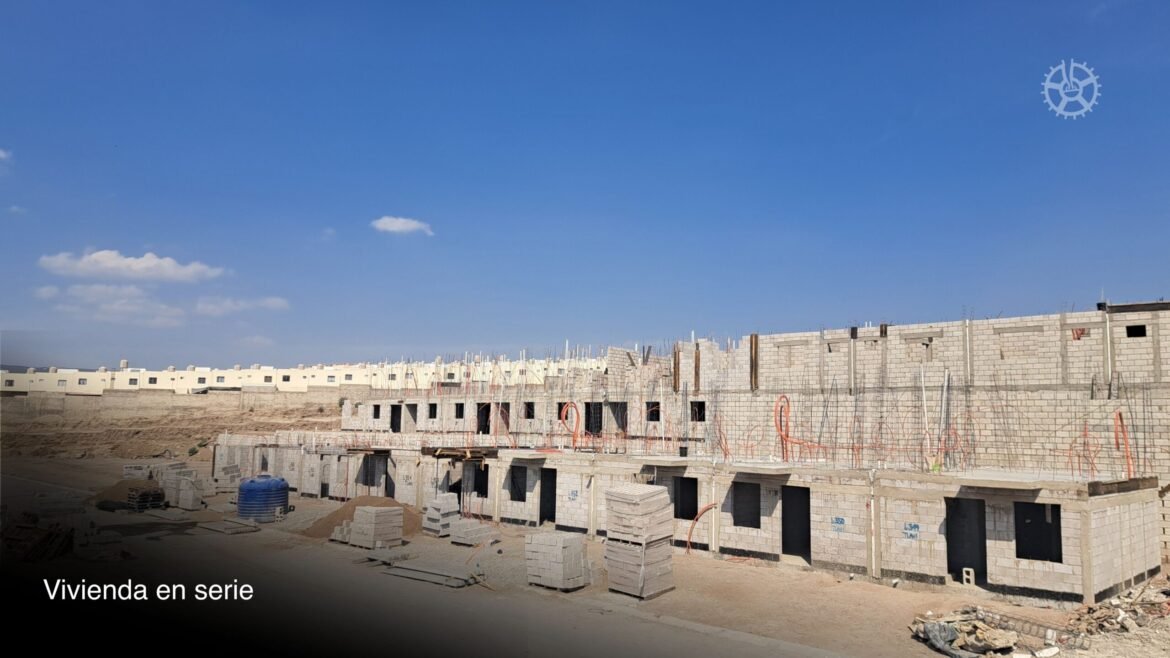
In serial housing construction projects, maintaining quality does not depend solely on on-site supervision. It also requires establishing clear procedures, selecting the appropriate materials, and ensuring that repetitive activities are executed under the same technical criteria. When a construction solution is repeated dozens or hundreds of times, even a small variation can become a recurring problem.
One of the aspects that deserves special attention is the concrete coating of the reinforcing steel. The position of the steel within a slab, a foundation, or any other reinforced concrete element must comply with the project specifications. To achieve this, it is necessary to consider from the planning stage the supports that will help maintain the reinforcement in the intended position, such as construction formwork and spacers for reinforcing steel.
In a single project, a poorly resolved detail can be detected during a review and corrected before proceeding. In a large-scale housing development, the same criteria can be repeated on numerous homes before anyone identifies a deviation. Therefore, standardizing construction processes is a fundamental tool for improving consistency and facilitating quality control.
Why is standardization important in the construction of mass housing?
The construction of mass housing is characterized by repeating designs, procedures, and activities in different housing units. This methodology allows for organizing production in a systematic manner, but it also requires monitoring the variations that may arise during execution.
When several crews work simultaneously or teams are distributed among different work fronts, it is important that everyone understands and applies the same criteria. Otherwise, an apparently simple activity can be resolved in different ways depending on the worker's experience, the available materials, or the instructions received during the shift.
Standardization seeks to reduce this variability through defined procedures, accessible specifications, and suitable materials for each application. Instead of relying on improvised decisions, the construction team has a clear reference point to carry out its activities.
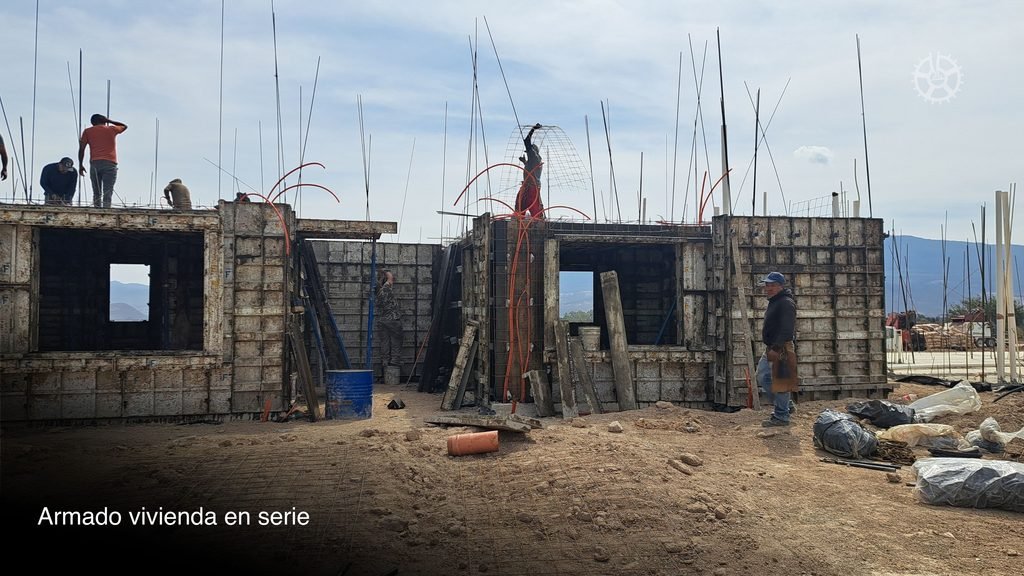
This approach is especially relevant in the assembly of concrete slabs, where the placement of reinforcing steel, supports, and spacers influences the final position of the elements before casting.
For example, if the first slab of a housing complex is prepared with a specific criteria, but the subsequent ones are executed with variations in the height or distribution of the supports, it will be more difficult to maintain uniform quality. In contrast, when there is a defined procedure applicable to equivalent elements, it is easier to repeat the solution and verify that the specifications are met.
The key is not to make all activities identical without considering their differences, but to establish uniform criteria for those that share the same design and execution conditions.
Concrete coating and its importance in structural elements
The concrete coating is the distance between the reinforcement steel surface and the outer surface of the concrete. Its thickness must meet structural specifications and requirements applicable to the construction element, taking into account factors such as design, exposure conditions, and expected durability.
Maintaining the specified coating helps protect the steel against agents that can favor corrosion and allows the conditions considered in the design of the reinforced concrete element to be respected.
However, during the preparation of the reinforcement, situations may arise that make it difficult to maintain the intended position of the steel. These include the use of inadequate supports, an irregular distribution of the stirrups, the lack of stability of the reinforcement, or the absence of uniform criteria for preparing similar elements.
For this reason, the coating control must begin before casting. Reviewing the reinforcing steel and its supports allows checking that the preparation of the element corresponds to the plans and specifications of the project.
It is important to note that the coating does not depend exclusively on a silleta. Structural design, the diameter and arrangement of the rods, the geometry of the element, the stability of the reinforcement and the execution conditions also play a role. Therefore, the accessories must be selected and installed as part of an integrated quality control procedure.
What function do construction stools serve?
Construction formwork is an accessory used to support and maintain the reinforcing steel at the intended height during the preparation of certain reinforced concrete elements. Depending on its design and application, it can help to maintain the separation between the steel and the surface of the formwork or support base.
Your selection should meet the specific needs of each element. The required height, the configuration of the assembly, the installation conditions, and the characteristics of the product are factors that must be considered before deciding what type of sill to use.
In the case of slabs, for example, it is important that the supports correspond to the specified coating and that their distribution provides stability to the reinforcement during the preliminary activities and during casting, in accordance with the anticipated conditions.
Using a spatula solely because it is available in the kit does not guarantee that it is suitable for the application. Two accessories may appear similar, but have differences in height, geometry, support capacity, or usage conditions.
Therefore, the selection must be based on previously defined technical criteria and not solely on the immediate availability of the material.
In serial housing projects, this decision also has an operational dimension. When the type of slab and its usage conditions are defined during planning, staff can prepare the assembly with greater clarity, and the supply of materials can be organized according to the needs of each work site.

Three actions to standardize the assembly of slabs
The quality of mass-produced housing can be enhanced through practices that reduce the reliance on decisions made at the time. In the assembly of slabs and other reinforced concrete elements, there are three aspects that are worth integrating into the work process.
1. Determine the support height before starting
The height of the seats must be determined according to the coating specified in the project and the characteristics of the element to be built.
When this criterion is not clearly defined, staff may resort to different supports or make substitutions that do not necessarily correspond to the specifications. Although these decisions may seem minor, their repetition can lead to differences between similar elements.
Having a clear specification allows you to identify the required accessory, verify its availability, and avoid having the support height depend on the materials available that day.
2. Apply a uniform procedure to each slab
In a housing development, slab number 300 must be executed with the same level of control as the first one, provided that both share the same design and construction conditions.
To achieve this, it is advisable to establish placement criteria, support distribution, and review of the reinforcing steel. These criteria must be communicated to the crews and kept available for those involved in the preparation of each element.
Uniformity does not mean ignoring the differences between projects or arming configurations. If dimensions, loads, specifications, or support conditions change, the procedure must be adjusted to the corresponding requirements.
The goal is for the variations to respond to real technical needs and not to individual interpretations or improvised decisions.
3. Integrating technical criteria into the material and the process
A constructive specification loses effectiveness if only one person knows it or if it is conveyed verbally in a different way at each turn.
Therefore, information about the type of saw blade, the required height, the intended application, and the placement conditions must be part of the work procedures and material planning.
This makes it easier for teams to identify the necessary accessories and understand how to use them. It also helps maintain the continuity of the process when crews change or new workers are added.
When technical criteria are part of the operation, quality no longer depends exclusively on individual memory or experience and becomes a shared practice.
The selection of steel reinforcement separators is also part of the quality control process.
In addition to the slings, there are different types of fasteners for reinforcing steel that are used according to the characteristics of the structural elements and the needs of the reinforcement.
Not all accessories fulfill the same function or are suitable for the same applications. Therefore, it is important to distinguish between products intended to maintain specific separations, support the steel, or contribute to the positioning of the reinforcement.
The selection must take into account the type of element, the required coating, the geometry of the steel, the installation conditions and the manufacturer's specifications. It is also necessary to verify that the accessory is compatible with the intended construction process.
In the construction of mass-produced housing, defining these criteria before starting work allows for better organization of the supply and reduces the need for improvised substitutions. Furthermore, it makes it easier for the construction managers to verify the correspondence between the materials used and the project requirements.
The planning of accessories for reinforced concrete should not be considered a separate detail. It is part of a broader strategy to maintain consistency in the activities that repeat during the execution of a housing development.
Why does more supervision not always mean better control?
Supervision is indispensable to ensure that work is carried out in accordance with the plans, specifications, and established procedures. However, increasing the number of revisions does not always resolve the source of a variation.
If each crew uses a different criterion for placing the seats, the quality team will have to continuously identify and assess those differences. If the procedure is standardized, however, the review can focus on verifying compliance and detecting specific deviations.
The difference lies between repeatedly correcting a problem and reducing the conditions that allow it to appear.
This does not mean eliminating inspections or assuming that a uniform procedure alone guarantees a correct result. Standardization must be complemented with pre-assembly checks, staff training, appropriate materials, and follow-up of project specifications.
When these measures work together, it is possible to establish a more consistent process and facilitate the timely identification of errors.
In large-scale projects, preventing repetitive variations can be particularly relevant because the same practice is replicated in numerous elements. Therefore, it is advisable to review not only the outcome of each activity, but also the way it is organized and executed.
Material planning helps reduce improvisation on the job site
The availability of suitable cradles and separators is another factor that must be considered during the planning of a construction project.
When the necessary accessories are not available at the required time, staff may face delays or resort to alternatives that must be evaluated before being used. Proper scheduling of supplies helps anticipate the needs of each work front.
To organize it, it is advisable to relate the quantities and types of accessories to the characteristics of the elements to be built, the stages of the construction program, and the applicable specifications.
This planning also allows for the establishment of criteria for the reception, storage, and distribution of materials, according to the characteristics of each product.
In residential developments with simultaneous activities, having clear information about the required materials makes coordination between purchasing, storage, residents, and installation crews easier.
The purpose is not only to have sufficient accessories, but to ensure that they are suitable for the intended application and available when needed.
Silletas: accessories that form part of a more controlled execution
In reinforced concrete projects, each component must be selected according to the function it performs within the construction process. Formwork and spacers are part of the resources that help prepare the reinforcing steel according to the specified conditions.
For construction companies that develop housing on a mass scale, considering these accessories from the planning stage can facilitate standardization in the assembly process, the organization of the supply, and the application of uniform criteria among equivalent elements.
The approach to construction accessories starts with recognizing the importance of proper selection based on the needs of each project. Identifying the application, reviewing the required heights, and considering installation conditions are important steps in determining which solution is appropriate for each element.
The final choice must be based on the project specifications and the technical characteristics of the available products.
When these criteria are defined before work begins, teams can carry out activities more clearly and the construction managers have a specific reference to verify compliance with the procedure.
Volume quality begins before placing the concrete.
In the construction of mass-produced housing, quality is not achieved solely through inspections at the end of each activity. It is also built from the planning, selection of materials, definition of procedures, and preparation of reinforcing steel.
Standardizing the support height, establishing uniform criteria for assembly, and ensuring that technical information accompanies the material are actions that help reduce variability in repetitive processes.
The construction formwork and the reinforcement steel spacers fulfill a specific function within this system: they contribute to positioning the steel according to the conditions foreseen for each application.
Their correct selection and use must be accompanied by appropriate supervision and checks that allow the compliance with the specifications to be confirmed.
Ultimately, the challenge of mass construction is not just about executing more elements in less time. It is about ensuring that each element is built according to the same technical criteria, while keeping in mind the specificities of its design.
Because when a constructive solution is repeated hundreds of times, the quality cannot depend on the judgment of the moment. It must be defined from the beginning and be part of every stage of the process.
At SIMEX, we invite you to learn about our solutions for reinforced concrete construction and to identify the accessories that best suit the needs of your project. Review the product specifications and select the appropriate option according to the specifications of your project.

 Spanish
 English