

How to avoid structural errors in concrete slabs
Guide to achieving safer and more efficient construction
Concrete slabs are one of the most important structural elements in any construction project. From homes and buildings to industrial warehouses, hospitals, and shopping centers, their performance directly impacts the safety, durability, and lifespan of the entire structure. However, many of the problems that appear over time originate from mistakes that could have been avoided during the design, reinforcement, or pouring stage.
A premature crack, insufficient steel coverage, or excessive deformation not only represent additional maintenance and repair costs, but can also compromise the structural performance of the building. Therefore, implementing good construction practices and using the appropriate accessories during steel assembly is essential to guarantee quality results.
In this article, you will learn what the most frequent errors in concrete slab construction are and how to prevent them to optimize the safety, performance, and durability of your project.
Why is a properly constructed concrete slab so important?
Slabs distribute loads to beams, columns, or structural walls, in addition to providing stability to the building. When any of their components are not properly executed, the structural behavior can be affected from the early stages of service.
A correctly constructed slab allows:
- Greater structural strength.
- Uniform load distribution.
- Better performance against movements and vibrations.
- Greater durability against environmental agents.
- Long-term maintenance cost reduction.
The quality of a slab does not depend solely on the concrete used; factors such as structural design, the placement of reinforcing steel, cover, formwork, and the curing process also play a role.
The most common errors in concrete slabs
Insufficient concrete cover for reinforcing steel
One of the most frequent mistakes is that the steel remains too close to the concrete surface.
When this happens, the steel is exposed to moisture, chemical agents, and carbonation, promoting the appearance of corrosion. As the steel rusts, it increases in volume and causes spalling, cracks, and a loss of structural capacity.
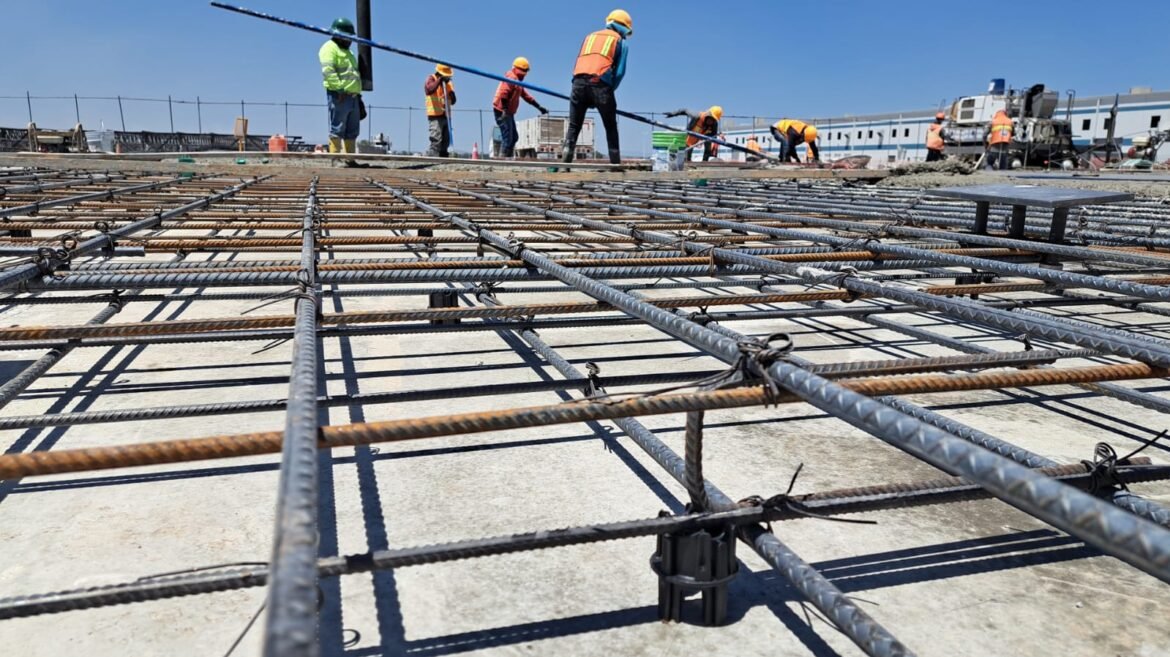
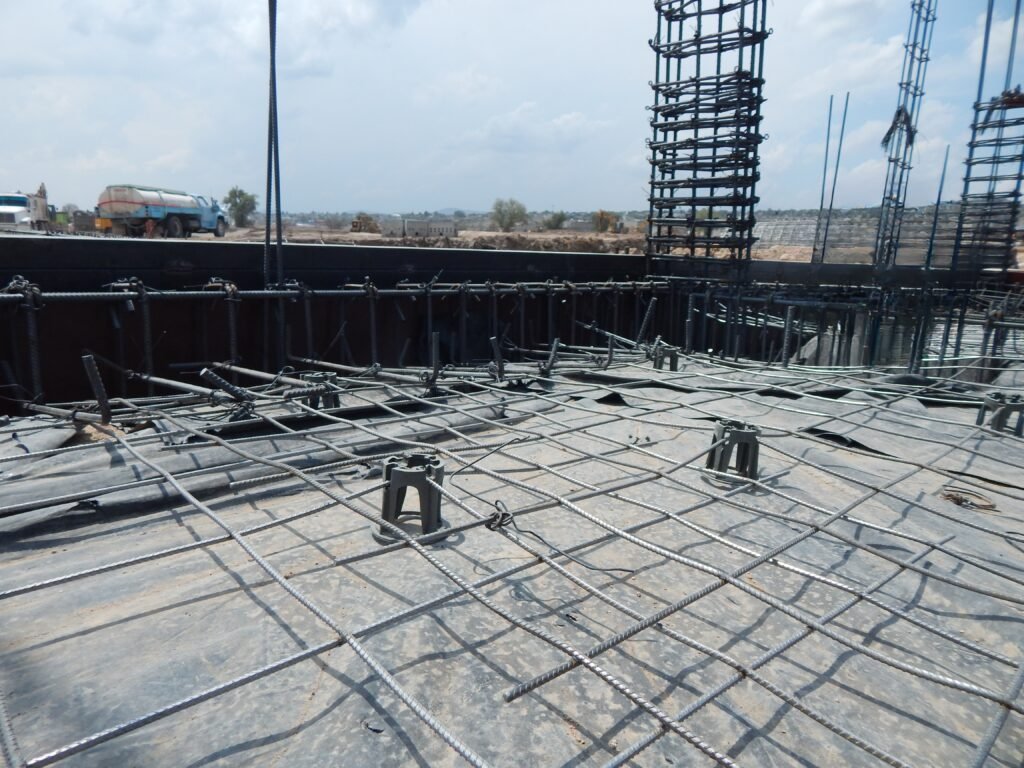
The best way to avoid this problem is to maintain the correct separation between the steel and the formwork by using chairs specifically designed to guarantee a uniform cover throughout the entire pour.
2. Steel movement during casting
It is common to observe that, during personnel traffic or concrete pumping, the steel grid shifts slightly.
Even if the movement seems minimal, it can modify the position designed by the structural engineer, altering the performance of the slab.
The use of correctly distributed high-strength chairs prevents displacement and keeps the steel in its original position throughout the pouring process.
3. Poor distribution of reinforcing steel
Incorrect spacing between rebar or placement other than that indicated in the plans can generate stress concentrations and areas vulnerable to the appearance of cracks.
Before pouring, it is essential to check that:
- Ensure the separations are as specified.
- There are no deformed bars.
- The overlaps comply with the structural design.
- The joints are correctly fastened.
A prior inspection significantly reduces the risk of errors that are difficult to correct later.
4. Deficiencies in stamping
The formwork acts as a temporary support for fresh concrete. If it presents deformations, unevenness, or low rigidity, the slab can lose its geometry or even collapse during the pour.
It is recommended to verify:
- Leveling.
- Carrying capacity.
- Surface cleaning.
- Proper shoring.
- Absence of loose elements.
A stable formwork helps achieve uniform thicknesses and higher quality finishes.
5. Improper use of concrete
Choosing a lower resistance than specified or modifying the mix by adding water on-site are practices that directly affect structural performance.
Adding water to improve workability decreases the strength of the concrete, increases porosity, and promotes the appearance of cracks.
It is recommended to use concrete with the strength specified in the project and to follow the supplier's recommendations during transport, placement, and vibration.
6. Lack of proper vibration
Vibration eliminates entrapped air and improves concrete compaction around the reinforcing steel.
When this procedure is not performed correctly, the following may appear:
- Internal voids.
- Gravel nests.
- Low bond strength between concrete and steel.
- Decreased resistance.
The vibration must be carried out uniformly, avoiding both excess and insufficiency.
7. Poor curing
After pouring, many construction projects neglect the curing process.
During the first few days, concrete needs to retain the necessary moisture to develop its strength. If it loses water quickly due to heat or wind, plastic shrinkage cracks may occur.
Applying proper curing methods helps increase the final strength and extend the service life of the slab.
The role of bar chairs in structural quality
Although usually considered minor accessories, chairs fulfill an indispensable function within the reinforcement system.
Its main objective is to keep the steel exactly in the position indicated by the structural design, guaranteeing a uniform cover during pouring.
Among its main benefits are:
- They keep the height of the steel constant.
- They prevent movement during emptying.
- They improve quality control on construction sites.
- They reduce rework.
- They favor greater durability of the structure.
- They contribute to meeting the project specifications.
Choosing chairs made of high-strength materials also makes it possible to support the weight of the steel and personnel traffic without deforming.
Best practices to prevent structural errors
In addition to using certified materials, there are actions that help reduce risks during construction:
- Review structural plans before assembly.
- Check the levels and thicknesses of the shoring.
- Confirm the steel cover.
- Use the appropriate seats for each application.
- Continuously monitor the assembly.
- Monitor the quality of the concrete.
- Execute the vibration correctly.
- Follow the curing times.
These practices significantly improve the quality of the work and reduce costs associated with future repairs.
Building with quality starts with the details
In structural engineering, the best results are obtained when each component fulfills the function for which it was designed. From structural calculation to the last accessory placed before pouring, every detail influences the safety and durability of the project.
Chair spacers represent a minimal investment compared to the total value of the construction project, but their correct selection can make the difference between a durable structure and one susceptible to premature problems.
At SIMEX, we develop specialized solutions to ensure the proper positioning of reinforcing steel in infrastructure, residential, industrial building, and civil engineering projects. Our products are designed to offer strength, stability, and precision during the construction process, helping our clients meet the highest quality standards.
If you are looking to optimize your projects and reduce structural risks from the assembly stage, our team can advise you in selecting the right solution according to the needs of your construction project.

 Spanish
  English