

Common mistakes when improvising spacers on construction sites and how to avoid them
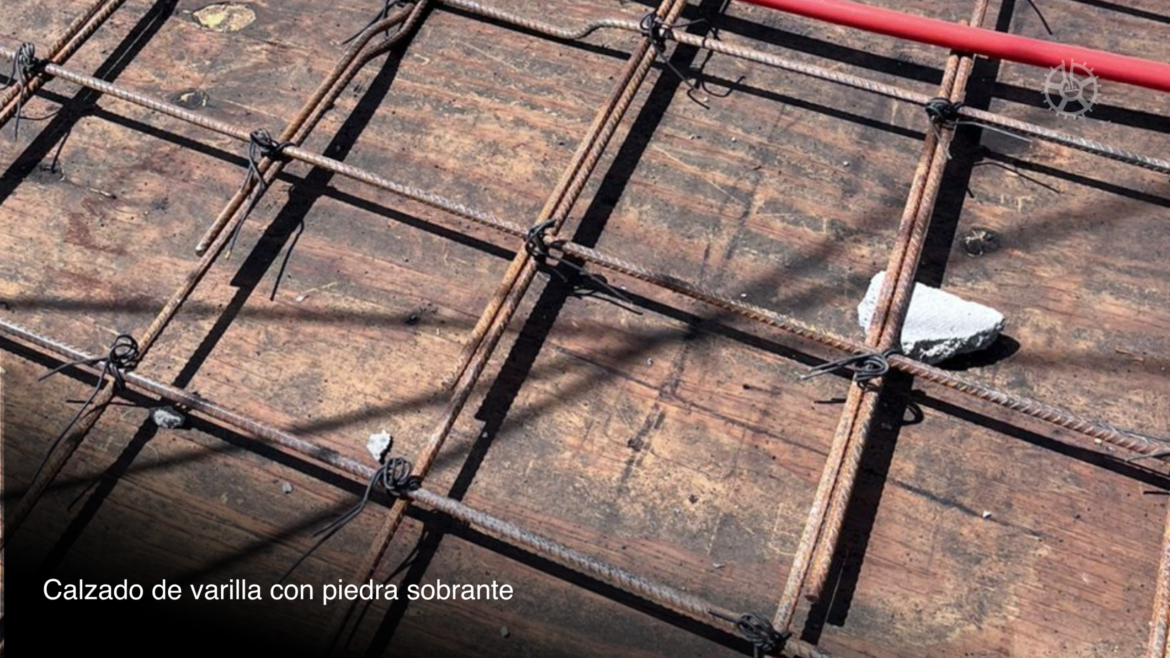
Stones, pieces of brick, wood, concrete debris, and even bent rebar. On many construction sites, improvised materials are still used to keep the reinforcement steel in position during pouring. At first glance, these alternatives may seem practical, fast, and economical; however, they can cause precision problems, rework, and additional costs.
In reinforced concrete, every detail of the assembly matters. A concrete spacer or a construction spacer designed for the correct application helps keep the steel in the specified position and achieve the steel coating indicated in the project.
Therefore, when it comes to construction chairs, improvising a seemingly small element can have significant consequences on the quality and productivity of a work.
Why are spacers improvised on construction sites?
In a construction project, there are constant pressures: delivery times, crew progress, material availability, and the need to resolve unforeseen issues. When the proper spacers are not available, it is common to use whatever is at hand.
Rocks, block or brick fragments, wood, concrete leftovers, and bent steel pieces can end up underneath the rebars or meshes as makeshift supports.
The problem is that these materials do not necessarily have the height, geometry, stability, or strength required to properly perform the function of a spacer.
A rebar chair, on the other hand, is designed to support the steel and maintain a specific distance from the formwork or supporting surface. This facilitates a more uniform cover and helps reduce movement of the reinforcement during pouring and vibration.
1. Use stones or irregular materials
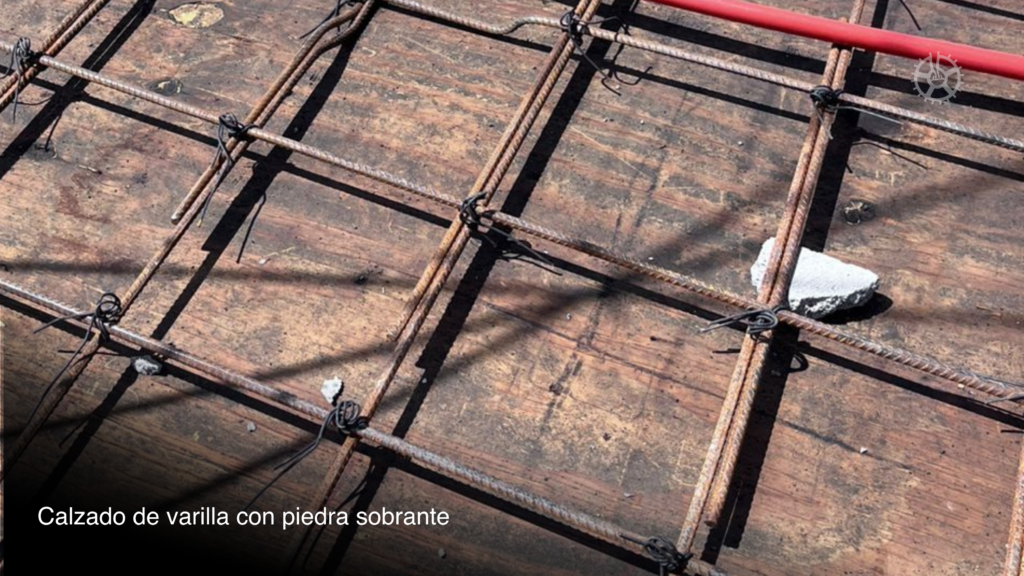
One of the most frequent construction errors consists of placing stones under the steel to elevate it.
A stone can have different heights, shapes, and support surfaces. As a result, the steel can end up at different levels within the same area, making it difficult to control the cover.
Furthermore, uneven support can shift due to personnel traffic, concrete placement, or vibrations produced during pouring.
The solution is to use construction spacers manufactured with defined heights and suitable for the type of steel and structural element. Thus, the reinforcement can rest on points specifically designed for that function.
2. Use pieces of partition, block, or concrete
Using construction waste may seem like a simple way to save money, but cutting pieces of partition wall, block, or concrete does not guarantee uniformity either.
If the supports have different dimensions, the steel can lose its intended position. This is especially important when the project specifies a particular cover.
The steel must not simply be left “a little high.” It must be maintained in the position defined by engineering.
To have steel spacers of different heights and applications, it allows for standardizing the assembly, facilitating installation, and making supervision simpler.
3. Bend rod to manufacture brackets
Another frequent resource is using leftover rebar and bending them manually to create supports.
Although it can solve an immediate need, this practice introduces another problem: the lack of standardization. Each piece can present a different height, geometry, and load-bearing capacity.
In addition, manually manufacturing these elements consumes labor time that could be dedicated to activities proper to the construction process.
The construction chairs prefabricated ones make it possible to have parts ready to install and designed for specific applications, reducing the need to manufacture improvised solutions at each work front.
4. Use few separators
Another mistake consists in thinking that as long as the steel is raised, the number of spacers is not relevant.
The distribution of the bar chairs is essential to keep the assembly stable. When the supports are too far apart, the rebar or mesh may experience movement, deformation, or level changes between the support points.
The quantity and distribution must be defined considering the characteristics of the element, the weight of the reinforcement, the execution conditions, and the project specifications.
That is why buying is not enough construction chairs. It is also necessary to select the appropriate model and establish a layout that keeps the steel in position during the different execution stages.
5. Choose a separator that does not correspond to the application
Not all spacers work for every structural element. A solution for a slab might not be suitable for a wall, a foundation, a column, or a pile.
Before choosing concrete spacers, it is important to check the type and diameter of the steel, the required coating, the reinforcement configuration, the weight it must support, and the placement conditions.
This selection must always start from the plans, specifications, and criteria established for each project.
What happens when the steel coating is incorrect?
Concrete cover is not merely an aesthetic detail. It is an important condition for steel protection and the durability of reinforced concrete elements.
When the bars are too close to the surface, they can be more exposed to environmental agents that promote corrosion. Over time, this can contribute to cracking, spalling, and other durability issues.
Therefore, the function of a chair is not simply to “lift the rebar.” Its objective is to help the steel remain in the position intended by the design during execution.
Do concrete blocks replace chairs?
Some works use “concrete traffic separators as steel reinforcement. However, its suitability depends on the specific characteristics of the element and the project specifications.
An industrialized solution allows working with previously defined dimensions and applications, while a support manufactured or improvised on-site may present variations in height, shape, and stability.
The right question is not only what material is available, but which solution consistently meets the specified steel coverage and positioning.
Improvising can end up costing more
Placing a stone or making a support with leftover material may seem free, but the initial savings do not necessarily represent a real savings.
An improvised solution can cause adjustments during assembly, steel movement, additional inspections, rework, and difficulties during pouring. In certain cases, it can also contribute to subsequent repairs.
Standardization transforms an activity that is usually resolved in an improvised way into a more controllable and repeatable process.
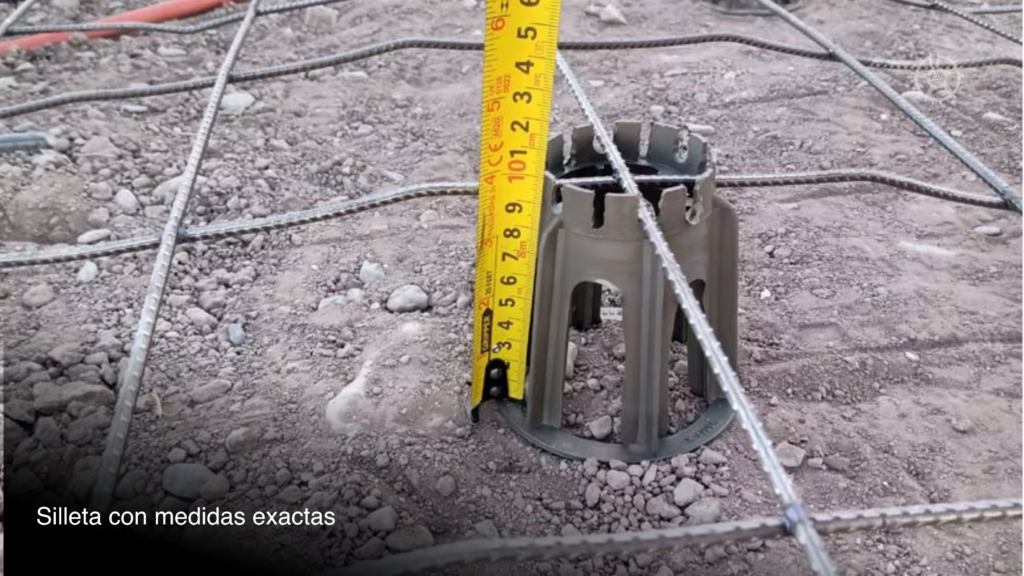
The right chair starts with the project
Before selecting a construction spacer, review the structural element, the type of steel, its diameter or gauge, the required cover, and the installation conditions.
Choose the correctly construction chairs help plan the assembly from the beginning and reduce errors on-site related to the position of the steel.
In SIMEX, there are solutions for different construction applications, with alternatives for various coating requirements and steel configurations.
The quality of a structure also depends on the small details. Stones, wood, brick, or bent rebar may seem like quick fixes, but the construction spacers adequate ones allow working with greater precision and consistency.
Before pouring, check the reinforcement, the concrete cover, and the distribution of the supports. Preventing a problem at this stage is usually much simpler than fixing it later.
In SIMEX We have chairs and spacers for different construction applications and we help you identify the right solution according to the characteristics of your project.
¡Contact us and let's make quality a part of the process from the very first pour!

 Spanish
  English